
WE_MIND BLOG
Planet | Product
Supply chain story: Cotton
(upd. )
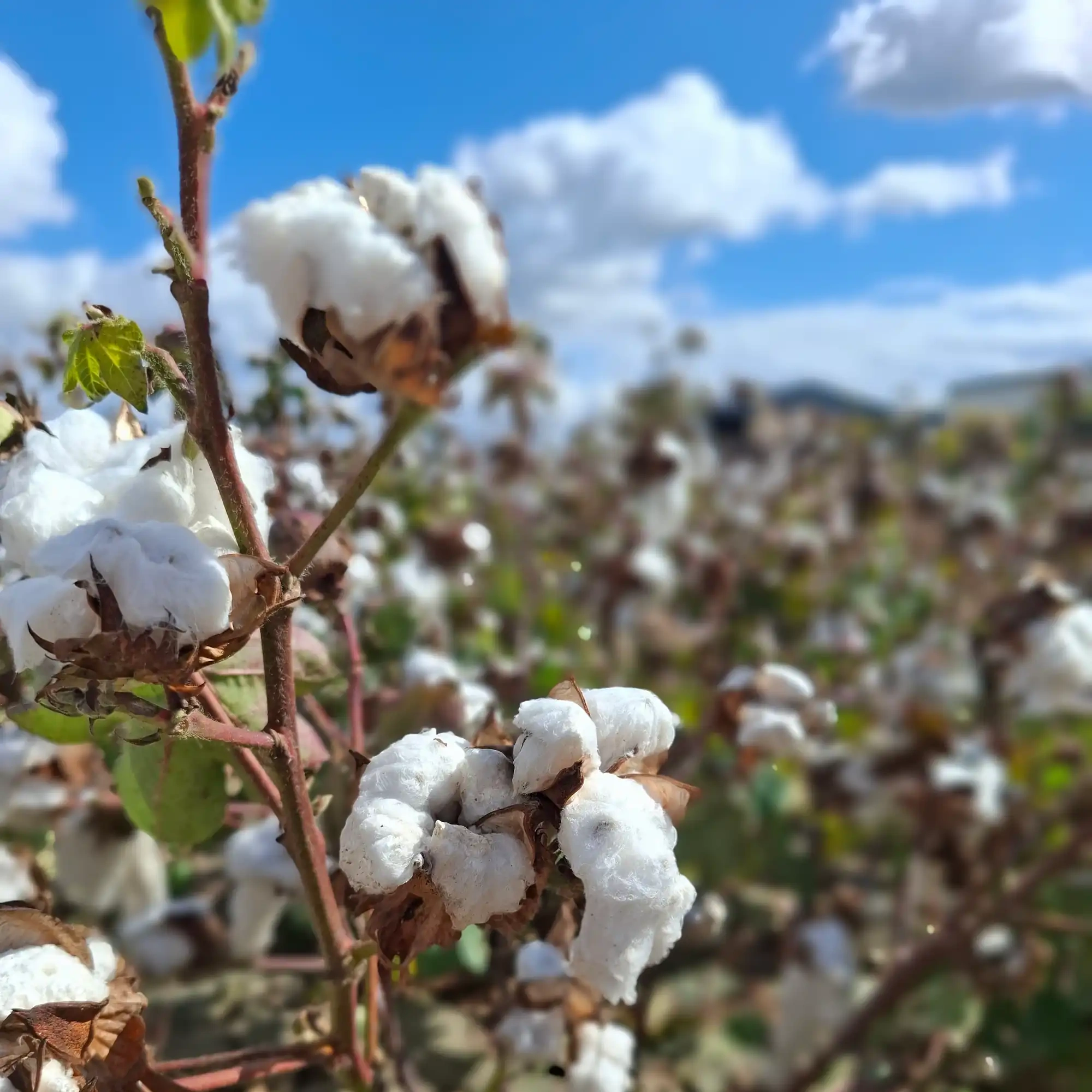
The Cotton Plant
Cotton is a member of the mallow family. Similar to dandelions, it first produces a flower. After the flower dies, a capsule forms in its place, which bursts open when ripe. A tuft of cotton fibers spills out of it. The light, long fibers originally served the same function as the dandelion's little parachute: they were meant to carry the plant's seeds on the wind to fertile soil.
Through selective breeding, humans have taken advantage of this property. Today, the plants with the longest fibers are the basis for high-quality yarn production.
Flower Power
The fields are vast, and most of the plants have been harvested. Harvesting machines collect the ripe cotton bolls, which are then sent to the ginning plant – often on the same day. In Turkey, harvesting is done entirely by machine.
What many people don't know is that about two-thirds of the cotton boll consists of seeds. Only one-third is the coveted fiber.
In the ginning plant – also known as a gin – the fibers are separated from the seeds and plant residue. This is a mechanical process in which rotating saws pull the fibers from the seeds. The fibers are then cleaned and sorted by length. The longer the fiber, the higher the quality. The fibers are then pressed into bales.
Good to know: the seeds do not end up as waste. They are used to produce cottonseed oil or are processed into protein-rich animal feed.
High-tech meets Craftmanship
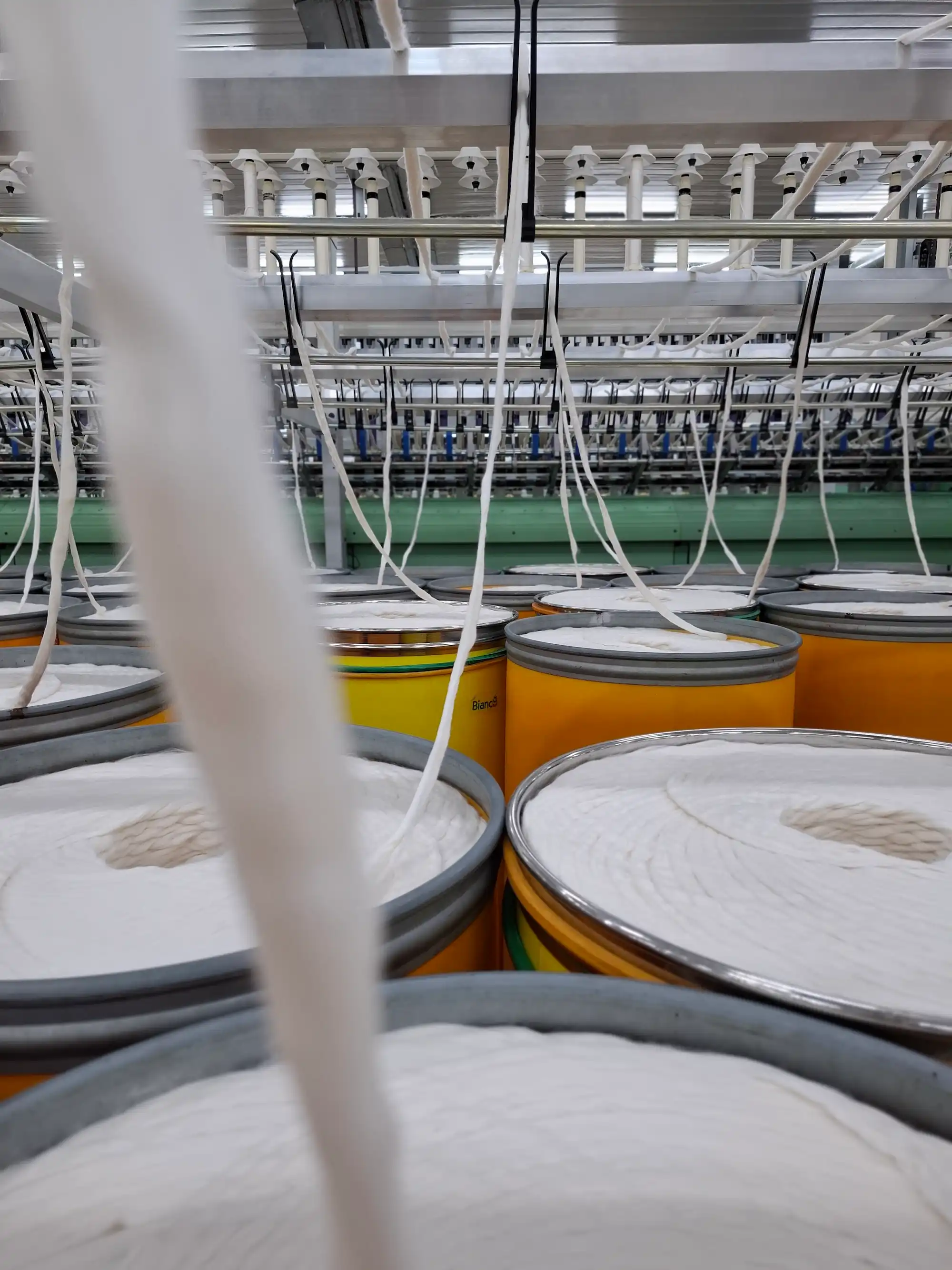
The spinning mill is a huge, spotlessly clean industrial facility. Here, the pressed bales are further processed. First, they are registered and checked for quality. Then fibers from different bales are swirled together in large compressed air systems and mixed. The goal is to ensure consistent quality and even out natural differences.
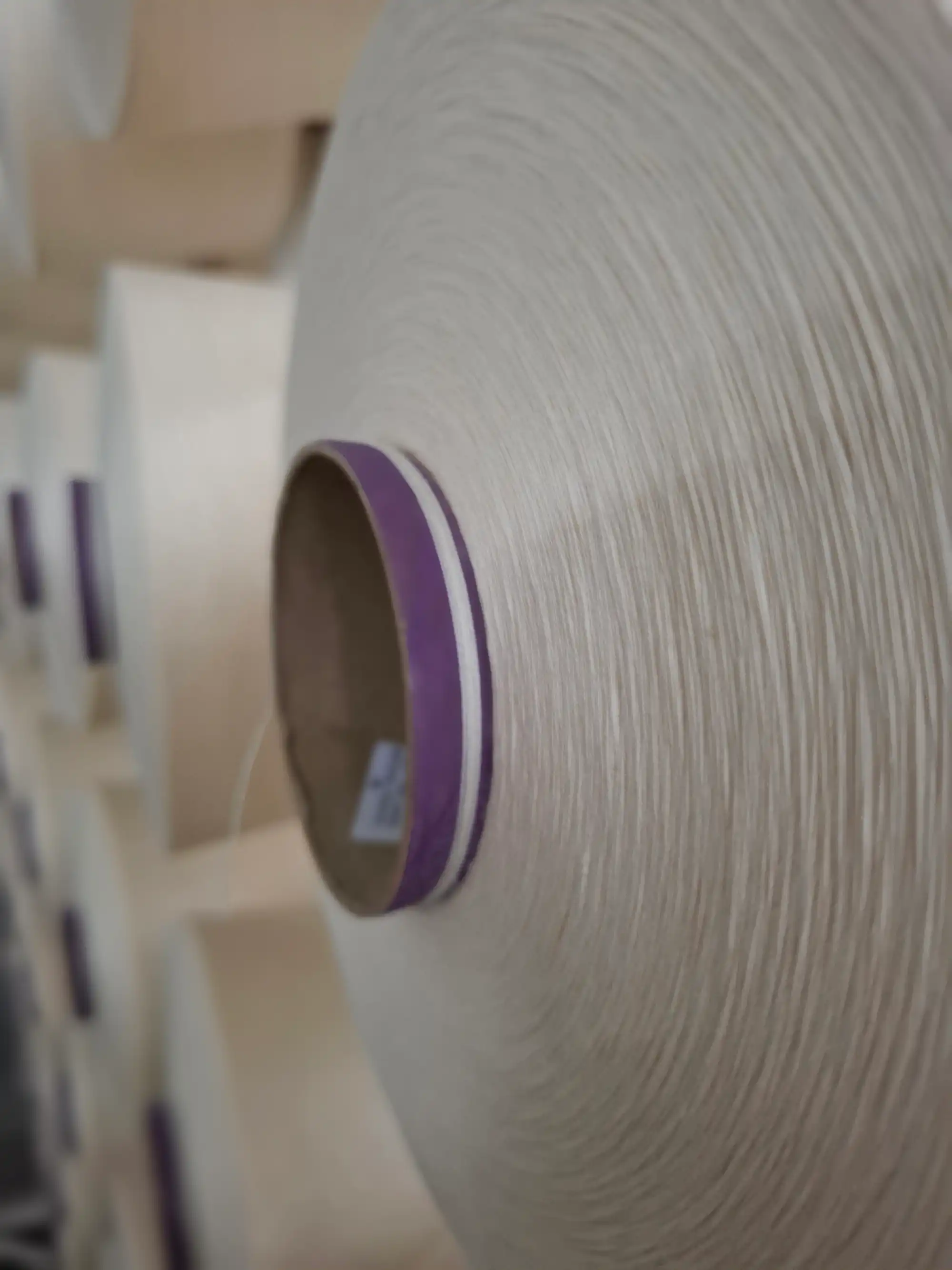
In the same closed system, the fibers are then collected and combed on large rollers – a process known as carding. They are then stretched and twisted. This produces a thick, loose roving (middle image). In several further steps, it is stretched, twisted, and refined again until a uniform yarn is produced (right image). Ready for further processing into fabrics.
From the field to the gin to the spinning mill – anyone who has seen this process in person, thinks differently about a cotton product. Our clothes deserve care, repair, and a second life.
FOR BEAUTIFUL PRODUCTS.