Love your clothes properly
Do you love your DRYKORN products as much as we do? Sometimes even well-meant care can be too much. Here are our tips for good garment care.
Care symbols and instructions
The golden rule is: pay attention to the care label when washing. To help you a little when reading a care label, we put together an overview of the most important care instructions.
Care Symbols
| 3 | 30 °C Normal wash |
| b | 30 °C Mild fine wash |
| 4 | 40 °C Normal wash |
| 5 | 40 °C Mild fine wash |
| e | 40 °C Very mild wash |
| h | Hand wash |
| j | Gentle hand wash |
| n | Do not wash |
| y | Do not tumble dry |
| x | Normal drying process |
| z | Mild drying processes |
| I_ | Do not bleach |
| t | Do not iron |
| a | Do not iron hot. Iron without steam. |
| q | Do not iron hot |
| r | Iron moderately hot |
| s | Iron hot |
| p | Professional dry-cleaning (Perchloroethylene) |
| P_ | Mild professional dry-cleaning (Perchloroethylene) |
| w | Professional wet-cleaning |
| W_ | Mild professional wet-cleaning |
| k | Do not dry clean |
Hand wash
Delicate pieces like wool are best washed by hand. It's easier than you'd think and it's the difference between a sweater you keep and one that gets ruined in a single false wash cycle.
You will need
Hand washing is no wizardry, and you certainly have the most important tools for it at home:
- a large bowl or bucket
- a gentle detergent
- lukewarm water (approx. 30 °C or less)
How to hand wash
- Dissolve the recommended amount of a suitable detergent in lukewarm water.
- Soak your garment completely and knead it gently for 1-2 minutes.
- Then leave it to rest in the washing solution for about 10 minutes.
- Take the piece out. Replace the dirty water with clean water and rinse the detergent residue out of your garment.
- Gently squeeze the water out of the garment by wrapping it in a towel. However, never twist it or wring it out!
- Lay the piece flat to air dry, either on a fresh towel or on a drying rack
Special case: Cold wash
Cold washing means (hand) washing with water that is no more than 20°C cold.
A little tip: If you set your tap to the maximum cold setting, the average temperature of your tap water is usually 15 – 20°C.
Your laundry machine’s hand wash setting
You can use your machine's hand wash program when the label says hand wash. Just know that these programs vary a lot between machines, some are close to a real hand wash, others spin harder than you'd want. For pieces you care about, do it by hand.
The best way
Material Care
What is the best way to care for wool? What does your suit need to keep its shape? With our garment care manual, you find the most important basics for the correct care of special materials and garments in one place.
Garment care
the robust and versatile fabric. With the right care, your denim pieces will keep their unique character.
WASHING FREQUENCY
Wash denim only when it's really necessary. Washing denim too often may cause it to fade and lose its shape. Treat stains with a stain remover instead.
New denim can stain: When washing it for the first time, you should therefore either wash it alone or with fabrics of a similar color.
COLD WASH
Wash your jeans in cold water to preserve their color and prevent excessive shrinkage. Turning your denim garments inside out before washing also prevents excessive rubbing and chafing.
NO DRYER
If you want to prevent your denim from shrinking, you should not use the tumble dryer. Instead, leave your denim garments out to air dry. However, avoid direct sunlight, as this can cause the color to fade, just like machine drying.
MENDING AND REPAIRING
You can mend or repair tears or holes in denim with little effort. This gives it a unique, personal look.
Wool knitwear wants to be flattered just as much as it flatters you. Treat it to a hand wash to maintain its unique feel-good factor.
SPOT CLEANING
If there are stains, dab the affected area carefully with a clean cloth immediately. It is important that you do not rub to avoid spreading the stain or damaging the fabric.
HAND WASH
The best way to wash your knitwear is by hand. You can find out exactly how to do this below.
Our recommendation: kaëll Kaschmirliebe
DRYING
Do not use a tumble dryer on knitwear. The heat and movement can shrink and damage it. Instead, lay your knitwear flat on a clean, absorbent towel and remove excess water by carefully rolling it up. Then dry the garment flat on a drying rack or a fresh towel. Protect it from direct heat or sunlight. If necessary, pull the garment back to its original shape.
STORAGE
Fold the garment carefully so that it does not stretch or warp. Do not hang knitwear on a hanger, as it could lose its shape over time. Cedar wood or lavender help to protect your pieces from moth infestation.
REPAIRS AND MAINTENANCE
If you notice loose threads or minor damage to your knitwear, you should repair it or have it repaired immediately to prevent your piece from becoming unwearable. Many natural materials, especially wool and fine hair, tend to form small nodules. This is a natural characteristic of the material called pilling, which cannot be avoided. However, you can simply treat the surface with a fabric shaver. Afterwards, the garments often look brand new again.
Our recommendation: PILO NO 2 FABRIC SHAVER
A suit needs more than just the standard care program. The care label shows you what you can do to keep it looking as good as yourself.
DRY CLEANING
To ensure that suits keep their shape, they should be dry-cleaned. For small stains, however, it is better to dab the affected area carefully with a clean cloth immediately after the stain happened. It is important that you do not rub to avoid spreading the stain or damaging the fabric.
STEAMING
Steam your suit to remove creases and freshen up the fabric between cleanings. To do this, hang it on a stable hanger, steam it evenly and keep the steamer at a safe distance from the fabric to avoid damaging it.
Our recommendation: Steamery Cirrus Lite Steamer
GENTLE IRONING
If you need to iron your suit, use a pressing cloth or a clean, damp cloth to protect the fabric from direct heat. Choose the right temperature for the fabric and iron using gentle movements without applying too much pressure. Avoid ironing over trims such as buttons or pockets.
PROPER STORAGE
Use a sturdy, padded hanger to support the shoulders and prevent sagging. Use the garment bag you received the suit in. Due to its breathable material, the garment bag allows moisture to escape, ensures adequate ventilation and protects against dust and dirt. Use cedar wood or lavender sachets to prevent moth infestation.
MODIFICATIONS AND REPAIRS
We recommend that you have alterations and repairs carried out by specialist tailors to ensure that your suit still fits perfectly after being modified.
The natural beauty – as long as you give it the care it needs.
WASHING
It's best to wash your linen clothes by hand. You can find out exactly how to do this below. You can also use the delicate cycle of your washing machine in combination with a mild detergent for delicate fabrics. Avoid bleach, wash the linen items separately and make sure that the water is at a maximum temperature of 30 °C.
We recommend this specialized detergent: kaëll Leineweber
DRYING
Linen can shrink when machine dried. We therefore recommend that you gently pull the garment into shape after washing and allow it to air dry.
GENTLE IRONING OR STEAMING
Due to its natural properties, linen can crease easily. By steaming your garment after washing, the stiff linen fibers will become soft and beautiful again. If you iron, use the “linen” or “medium” heat setting. Ironing the fabric slightly damp or using a steam iron is the best way to get rid of creases.
PROPER STORAGE
Fold your linen clothes carefully and avoid storing them in piles, as this can lead to permanent creases. You can also hang them up, using padded hangers to prevent deformation. However, keep them in a closet as direct sunlight could cause the colors to fade. Cedar wood or lavender sachets prevent moth infestation.
the heavy-duty everyday companion. Care for it well and it takes on your story.
MOISTURE
You can protect the leather of your garment from moisture with a high-quality waterproofing agent. If the leather does get wet, gently dab it with a clean, dry cloth and allow it to air dry. Do not use any additional heat sources for drying, such as a heater, hairdryer or direct sunlight, as these can damage the leather.
CLEANING
With smooth leather, you should carefully dab off stains with a slightly damp cloth. Be careful not to soak and rub the leather, as this will spread the stain and make it harder to remove. Use a soft brush to remove dust, dirt and other impurities from suede. If you are unsure or have a stubborn stain, we advise you to seek professional leather cleaning.
CARE
Care for smooth leather regularly with leather conditioner to restore the leather's natural oils, prevent cracks and keep it supple. Apply the conditioner with a soft cloth and rub it in gently using circular movements. Leave it on for a few minutes and then wipe off any excess conditioner.
STORAGE
Store leather in a cool, dry and well-ventilated place. This should prevent the leather from being exposed to direct sunlight and thus protect it from losing its color. However, never store it in plastic bags or airtight containers, as this can lead to moisture accumulation and mold growth.
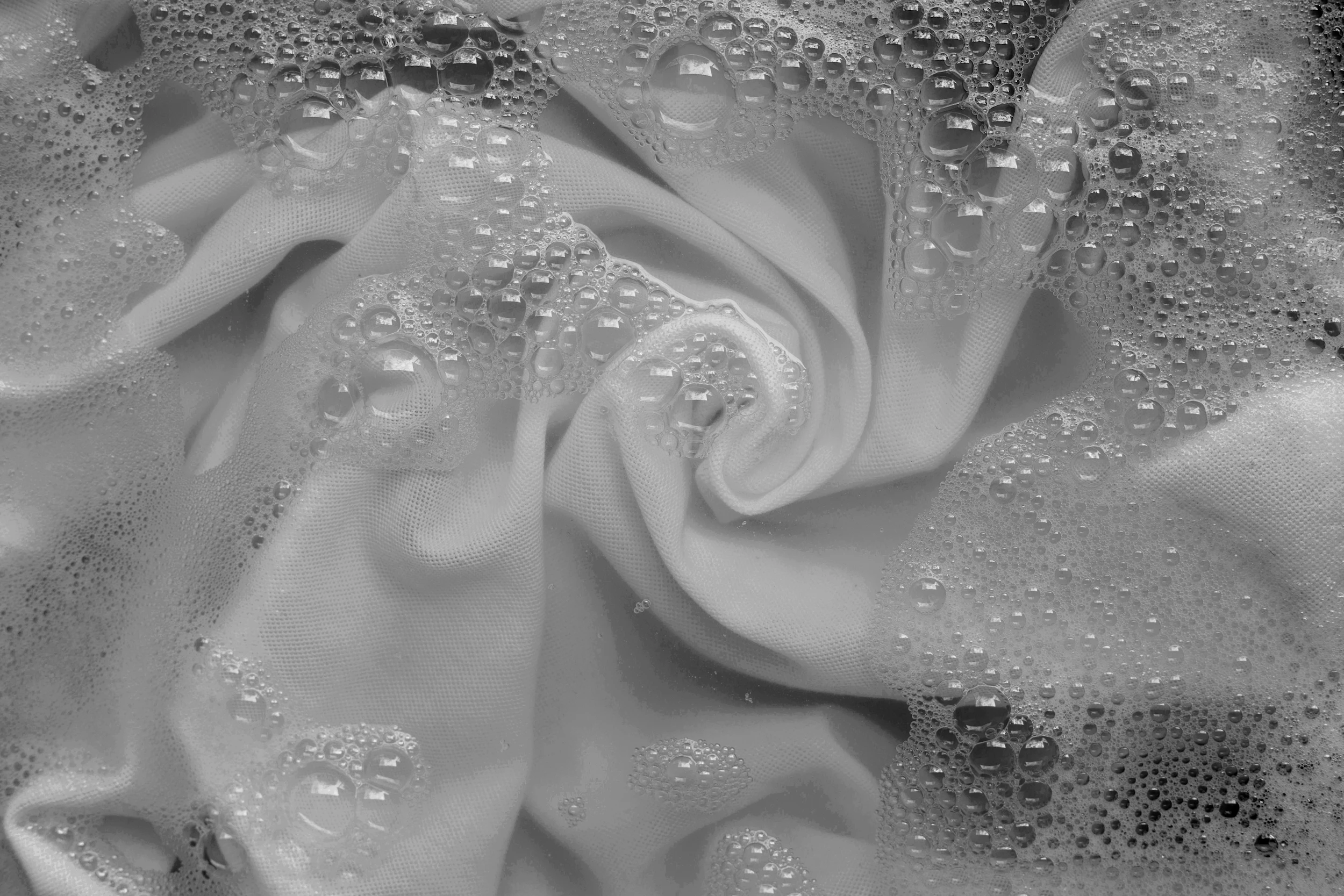
CARE4WOOL
A special guide for one of our most delicate fibres
Wool and fine animal hair are among the oldest materials people have used to make clothing. We work with them because their properties in textiles are well documented and unique.
However, animal fibres can be a little bit tricky to care for, so here is our detailed guide to wool care.
Why is wool so special?
- It has exceptional heat retention properties.
- It absorbs moisture. Wool is hygroscopic: it can absorb water vapour of up to around 35% of its own weight before it feels damp.
- If wool gets wet, it releases heat (sorption heat), unlike other fibres like cotton, which will get cold once wet.
- It releases odour molecules relatively quickly – so airing a worn garment is often enough to make it fit for wear again.
- It resists dirt. Wool is fairly dirt-repellent, but once a stain has set, it is harder to remove. That is why it pays to act quickly.
These properties relate to the fibre. How an individual garment behaves also depends on the blend, yarn, construction and finishing.
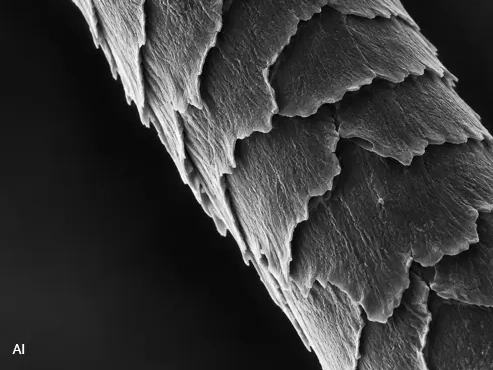
Why wool can shrink
The surface of every wool fibre is covered in fine scales, all pointing in the same direction (example image on the left). Friction is therefore greater against the grain than with it. When moisture, heat and movement come together – in the washing machine drum or the tumble dryer – the fibres migrate in one direction, interlock and cannot return. The fabric becomes denser and shrinks: it felts.
Felting cannot be reversed. A felted jumper cannot be brought back to its original size.
Not all wool is the same
What your garment is made of is always stated on the care label. Find out what the terms mean.
Decoding the care label
Wool describes the fibre from the fleece of sheep – or a blend of sheep’s wool and the hair of certain other animals, such as alpaca or the cashmere goat. If the label says only “wool”, it may also be made from recycled fibres. “Merino” is not a fibre name in its own right but a breed of sheep; the label of merino garments therefore says “wool” or “virgin wool”.
A protected term. “Virgin wool” may only appear on a label if the wool has never been part of a finished product, has only been through the spinning or felting processes needed for manufacture, and has not been treated or used in a way that damages the fibre. In blends, the term is only permitted if the wool makes up at least 25% and the blend contains only one other fibre.
The hair of the alpaca, a South American member of the camel family. Alpaca contains hardly any wool grease (lanolin) and has flatter scales than sheep’s wool, which explains its smooth, cool handle. It can still felt. Brushed alpaca qualities shed a little hair in the first few weeks – this lessens over time.
The name is not quite what it seems: baby alpaca does not come from young animals. The term in fact describes a particularly fine alpaca fibre, although there is no uniform definition. Depending on the grading system, the limit lies at roughly 19 to 23 microns of fibre diameter.
The fine, particularly soft undercoat of the cashmere goat, which is combed out or shorn and separated from the coarser outer hair. Because the fibres are very fine and relatively short, cashmere forms small bobbles (pilling) more easily at points of friction – this is a property of the material, not a defect. Pilling can be removed easily with a special comb or a pilling shaver, like the Pilo No. 2 from Steamery.
Buying
The right decision starts with reading the care label. Two minutes before you buy will spare you disappointment later.
FIBRE COMPOSITION
- The fibre content must be stated as a percentage. “100%”, “pure” or “all” may only appear on products made of a single fibre.
- Blends with polyamide or other fibres change the handfeel, durability and care requirements. The care label of the individual garment is always what counts.
FINENESS AND FEEL
- The finer the fibre, the softer it feels. Coarser fibres can feel scratchy on the skin, but are usually more robust.
- Very fine qualities such as cashmere or baby alpaca are especially soft but react more sensitively to friction. For pieces that have to withstand a lot, a sturdier quality may be the better choice.
THINK ABOUT CARE
- Check the care label before you buy: hand wash, wool cycle or professional cleaning only? Choose what suits your everyday life.
Storage
Properly stored, wool gets through the summer without stretching, creases or moth holes.
OFF-SEASON
Residues of sweat, skin flakes or food attract moths. Wash or clean woollen garments before you put them away for a longer period – and only store them when completely dry.
- Store knitwear folded. On a hanger it stretches and gets shoulder bumps.
- Hang coats and jackets on wide, shaped hangers and fasten them, so that shoulders and lapels keep their shape.
- Store wool in a cool, dry, dark place. In breathable garment covers or boxes, clothing is protected from dust and moths.
- Leave some air in the wardrobe. Garments hung too tightly crease and lack ventilation, which benefits moth infestation.
- Cedar wood or lavender pouches can help to deter moths. But they are no substitute for regular checking and airing – and need replacing from time to time.
- Every few weeks, take stored pieces out briefly, look them over and air them. Moths like neither light nor disturbance.
MOTHS
If you find holes, moths or their larvae in your garments, keep calm: sort out affected pieces and vacuum the wardrobe and crevices thoroughly before wiping everything down with a mild surface cleaner of your choice. Textiles that cannot be washed can be frozen, at −19 °C for at least 36 hours. Then keep checking for several weeks.
Can I take moth-infested clothing to the dry cleaners?
Moths are a delicate subject for dry cleaners, and you should never take a (probably) infested garment to your trusted cleaner unannounced and unwrapped. Call them beforehand and ask whether they accept infested items and what precautions you need to take (e.g. packing affected clothing in plastic).
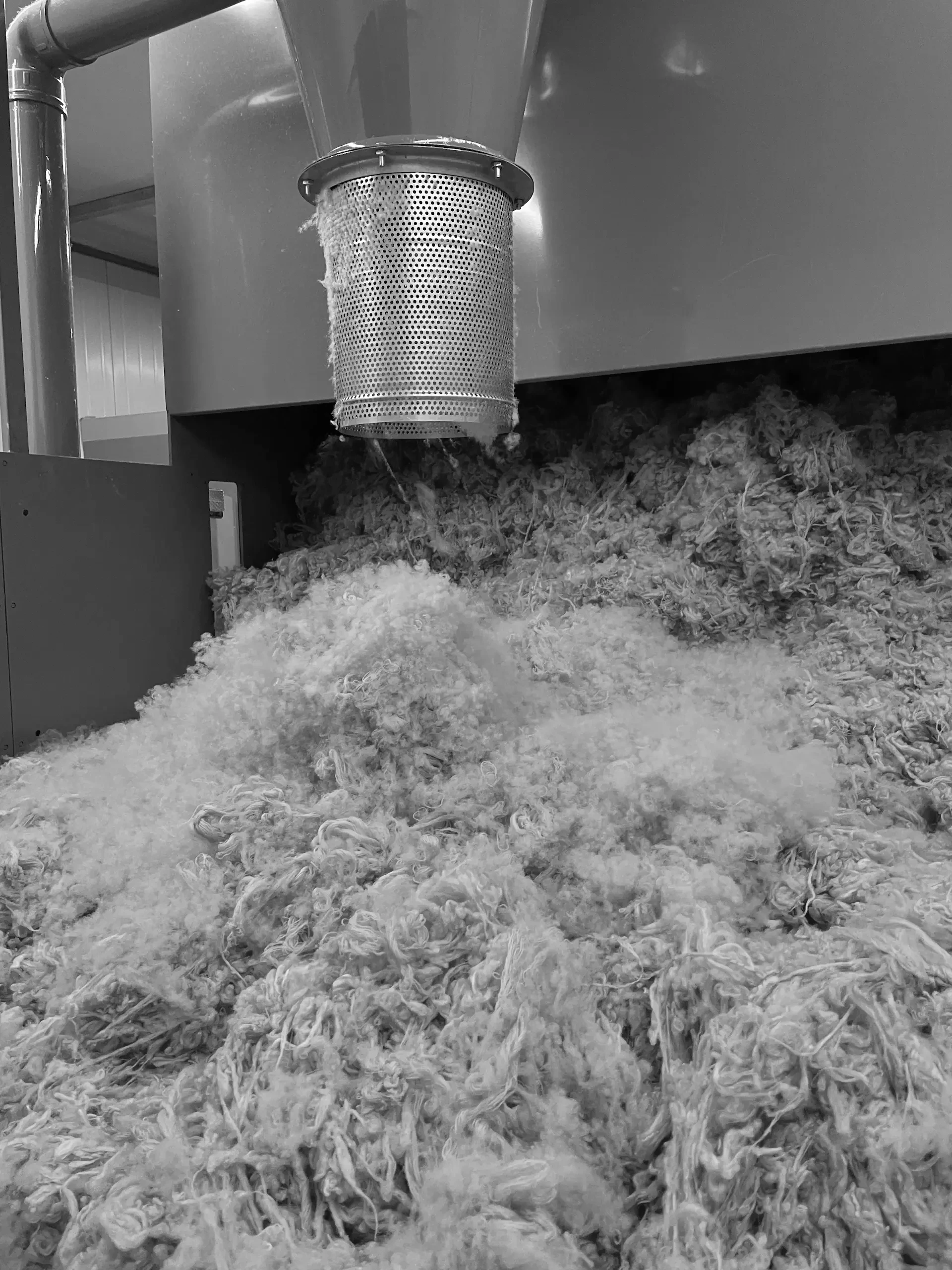
Washing
The most important rule first: wool needs to be washed less often than you think. And when it does, keep it cool, gentle and use the right detergent.
AIR FIRST, THEN WASH
Often it is enough to leave a woollen garment hanging overnight in the fresh air, or in the bathroom after a shower. Treat individual stains on the spot (see “Daily Care”). Wash when the garment is visibly dirty or no longer smells fresh after airing.
MACHINE WASH – ONLY IF THE LABEL ALLOWS IT
As a rule, we always recommend that woollen garments should be washed by hand (more here). It is the method least likely to have unwanted effects on the textile. If the care label allows machine washing, proceed as follows:
- Select the wool or hand-wash programme, at 30 °C at most or at the temperature stated on the label.
- Use an enzyme-free wool detergent. No universal detergent, no bleach. Fabric softener is not necessary either. High-quality wool detergents contain re-greasing lanolin, which keeps the fibres supple and protects them from drying out. Our recommendation.
- Turn the garment inside out, put delicate items in a laundry bag and do not overload the drum.
- Select a low spin speed.
EXCEPTIONS
Special garments like coats and pieces with linings or leather details generally belong with a professional cleaner. Follow the carelabel.
Drying
Drying is what decides whether a knitted piece keeps its shape. Flat, without heat, with patience.
DOs
- A garment that has not been spun, or has been hand-washed, holds a great deal of water. So first lay it out on a large towel and roll it up. Gentle pressing transfers the water from the garment to the towel.
- The garment can then be laid flat and left to dry on a dry towel placed on a drying rack.
- While still damp, pull it into shape – align the length, sleeves and cuffs as the garment should sit – and leave it to dry at room temperature, away from radiators, stoves and direct sunlight.
DON'Ts
- No tumble dryer, unless the care label expressly allows it. Heat and friction in the drum will shrink your garment and make it felt.
- Never dry your woollen knitwear on a hanger or like an ordinary garment flipped over a drying rack. There is a risk that it will stretch and lose its shape.
- Do not dry on a radiator. Heat makes the fibre brittle and can cause it to felt.
COATS
A woollen coat that got hit by rain dries best on a wide, shaped hanger at room temperature. When dry, brush it into shape with a soft brush.
Daily Care
To sum things up: small habits and respecting the care label keep wool in shape. Below are our six essentials to keep in mind in your day-to-day, so your DRYKORN wool pieces may stay beautiful for you.
FOR BEAUTIFUL WOOL.
The care routine
After wearing, it is often enough to let the garment air – creases drop out and odours disperse.
Bobbles form where fabric rubs against fabric – under the arms, at pocket edges, under straps. This is normal, especially with fine fibres such as cashmere, and usually eases after the first few weeks. Remove the bobbles with a wool comb or fabric shaver, without pulling and without pressure. Our recommendation.
A garment steamer or an iron with a steam burst – without direct contact – freshens wool and smooths out creases. We recommend the Cirrus Lite Steamer from Steamery. If the label allows ironing: choose the wool setting and iron inside out, or with a slightly damp cloth in between.
If you got a stain on your piece, follow these guidelines:
- Act quickly: wool resists dirt, but also gives up a set-in stain reluctantly.
- Blot any liquid with a clean cloth; do not rub.
- Dab the stain gently with a clean, soft cloth and cold water mixed with a little wool detergent. Do not use stain removers containing enzymes or bleach.
- For stubborn stains, grease or delicate pieces: take it to a professional cleaner.
After wearing, brush coats and woven woollen fabrics with a clothes brush, in the direction of the weave. This removes dust before it settles in and lifts the surface.
A pulled thread or a small hole can still be fixed well and often times invisible if caught early. If you wait, the damage gets bigger. For more tips on garment repairs, check our Repair Guide.