

Love your clothes properly
Do you love your DRYKORN products as much as we do? Sometimes even well-meant care can be too much. Here are our tips for good garment care.

Pay attention to care labels
The right washing temperature, the best possible cleaning method and the right way to dry - the symbols and instructions on the care label give you the right care instructions for each material. That's also why we recommend that you should not cut off the care label.

Wash only if you need to or use steam
Don't wash your clothes after every wear. For many garments, such as jeans and sweaters, it is sufficient to air them out occasionally. Do you feel like your clothes need a little freshening up? Then treat them with steam first, for example with the Cirrus Lite Steamer.
Using the right detergent and less of it
Our general advice when it comes to detergents: Less is more. A small dose does the job. Overdosing doesn't clean better, it could result in residue staying in the fibers, stiffening the fabric or leaving marks. You should also not use heavy-duty detergents for colored clothing, as they contain bleaching agents and can damage the color pigments. Use a color detergent instead, and keep darks separate from lights and whites.
Be especially careful with fabrics made from animal hair, such as wool or alpaca as one wrong wash cycle can ruin them forever. Hand wash with an enzyme-free wool detergent containing lanolin. Our recommendation: kaëll Kaschmirliebe.
Wash cold
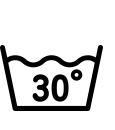
It is usually sufficient to wash your clothes at 30 °C if they're not heavily soiled. Washing at 30 °C is gentler on colors and reduces the risk of shrinkage. Towels and underwear should be washed at 60 °C – here a heavy-duty detergent makes sense, and the higher temperature also keeps your machine from getting musty. For everything colored, stay with a color detergent.

Reduce the spin speed
Low spin speeds between 600 and 1,200 rpm ensure fewer creases and reduce wear on your garments. We also recommend using a laundry bag for delicate materials.
Air dry whenever possible
Air dry your clothes instead of using a dryer. Hang them on a clothesline or lay them on a drying rack. Hanging clothes in direct sunlight can cause colors to fade, so avoid it where you can.

Prevent Wear & Creases
To freshen up clothes and remove creases, we recommend letting off steam rather than ironing. It saves time, nerves and is easier on the fibres, because there's lessstress on the fabric than there is when washing or ironing. If you wash your clothes on a reduced spin speed and hang them on a hanger immediately afterwards, you can also prevent creases.
Our recommendation: the Cirrus Lite Steamer
Store correctly
A clean and dry environment for your favorite items is a must! While knitwear should be carefully folded in the closet, delicate fabrics should be put on a hanger. Rarely worn pieces are ideally stored in a garment bag. Use sturdy, wide hangers for coats and suits. To avoid creases it is best not to hang your pieces too close together.
Against moths, add scented sachets with cedar wood or lavender. Refresh them every few months because once they stop smelling, they stop working.
Care symbols and instructions
The golden rule is: pay attention to the care label when washing. To help you a little when reading a care label, we put together an overview of the most important care instructions:
| 3 | 30 °C Normal wash |
| b | 30 °C Mild fine wash |
| 4 | 40 °C Normal wash |
| 5 | 40 °C Mild fine wash |
| e | 40 °C Very mild wash |
| h | Hand wash |
| j | Gentle hand wash |
| n | Do not wash |
| y | Do not tumble dry |
| x | Normal drying process |
| z | Mild drying processes |
| I | Do not bleach |
| t | Do not iron |
| a | Do not iron hot. Iron without steam. |
| q | Do not iron hot |
| r | Iron moderately hot |
| s | Iron hot |
| p | Professional dry-cleaning (Perchloroethylene) |
| P | Mild professional dry-cleaning (Perchloroethylene) |
| w | Professional wet-cleaning |
| W | Mild professional wet-cleaning |
| k | Do not dry clean |
Garment care
What is the best way to care for wool? What does your suit need to keep its shape? With our garment care manual, you find the most important basics for the correct care of special materials and garments in one place.
Hand wash
Delicate pieces like wool are best washed by hand. It's quicker than you'd think and it's the difference between a sweater you keep and one that gets ruined in a single false wash cycle.
You will need
Hand washing is no wizardry, and you certainly have the most important tools for it at home:
- a large bowl or bucket
- a gentle detergent
- lukewarm water (approx. 30 °C or less)
How to hand wash
- Dissolve the recommended amount of a suitable detergent in lukewarm water.
- Soak your garment completely and knead it gently for 1-2 minutes.
- Then leave it to rest in the washing solution for about 10 minutes.
- Take the piece out. Replace the dirty water with clean water and rinse the detergent residue out of your garment.
- Gently squeeze the water out of the garment by wrapping it in a towel. However, never twist it or wring it out!
- Lay the piece flat to air dry, either on a fresh towel or on a drying rack
Special case: Cold wash
Cold washing means (hand) washing with water that is no more than 20°C cold.
A little tip: If you set your tap to the maximum cold setting, the average temperature of your tap water is usually 15 – 20°C.
Your laundry machine’s hand wash setting
You can use your machine's hand wash program when the label says hand wash. Just know that these programs vary a lot between machines, some are close to a real hand wash, others spin harder than you'd want. For pieces you care about, do it by hand.