FOR BEAUTIFUL PRODUCTS
WE KNOW THAT WE ARE LIVING IN A MATERIAL WORLD
The fashion industry is facing major challenges, and it is inevitable that our products consume resources. We believe in excellent craftsmanship to ensure that the resources we do use are turned into quality products that last. We also believe that proper care is the key to a long product life – that's why we've put together some tips for you: Care Guide
What are we made of?
77%
of our material volume stems from natural materials. We differentiate between plant-based materials like cotton or hemp, animal materials like wool or leather as well as regenerated fibers like Viscose or Modal.
We use synthetics deliberately, for example when performance requirements like durability call for them.
43%
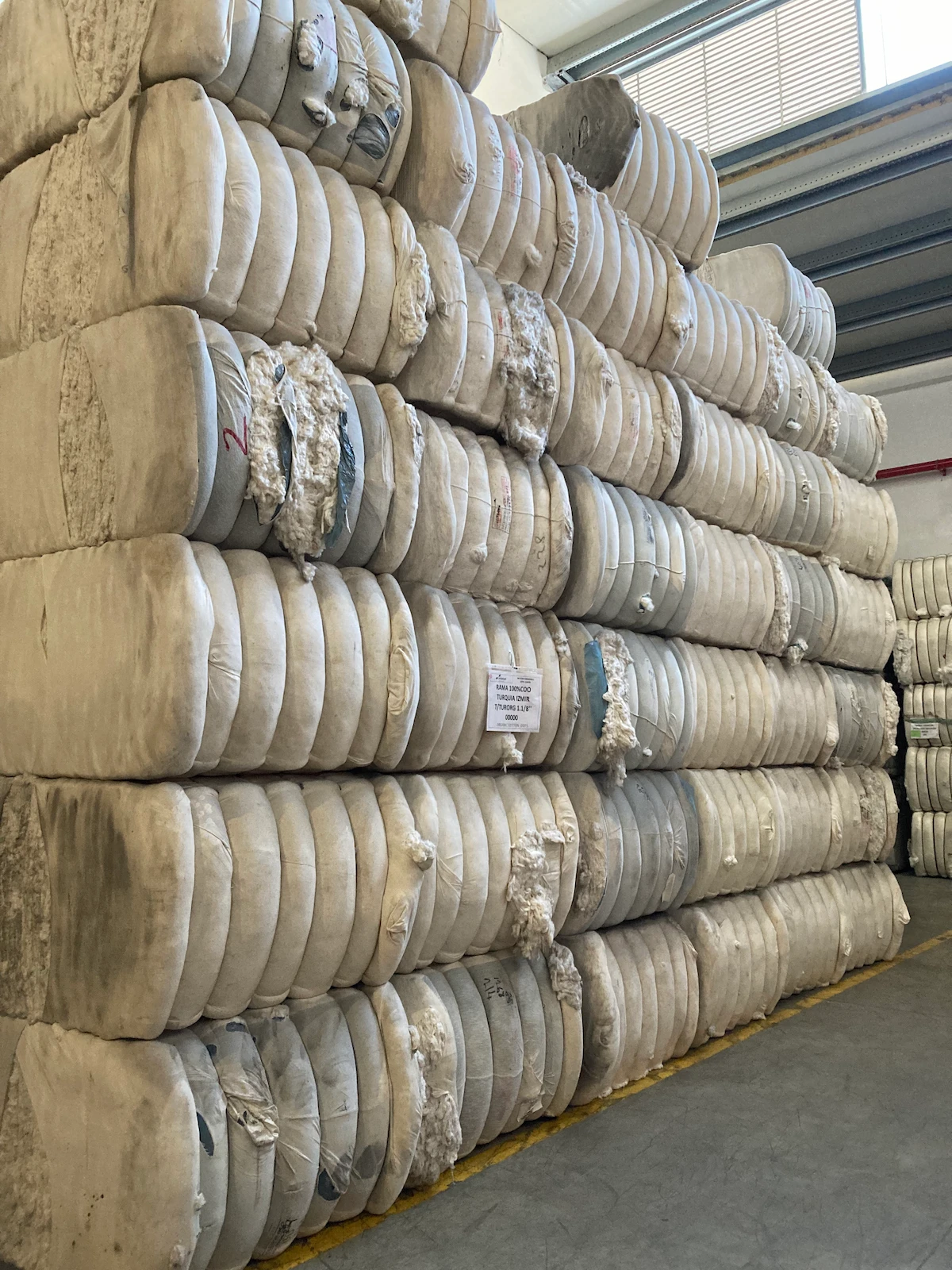
of our material volume is cotton. At 300 metric tons, it is our most-used fiber, followed by sheep's wool and polyester, which are on par at 13% of fiber volume.
Metrics in relation to FY 2024/25

Be kind to every kind. Not just humankind.
Using products of animal origin comes with responsibility. We want to do justice to the animals indirectly affected by our actions, which is why we developed our policy on animal materials. It sets out our internal guidelines on animal materials and animals in the context of DRYKORN. It's also part of our contractual package with suppliers.
To you and your DRYKORN product this means
- The leather or lambskin in your product is a by-product of the food industry.
- The leather was tanned in a Leather Working Group certified tannery, rated “Silver” or “Gold”.1
In your DRYKORN product you won’t find
- Real fur
- Angora
- Mohair
- Materials sourced from threatened, exotic or endangered species.
1 The LWG rating system ranges from “Bronze” to “Silver” and then to “Gold.” The assessment is carried out through an on-site audit in the tannery, where a total of 17 factors across the areas of environmental impact, occupational safety and health protection, chemical management, and traceability are examined and evaluated. For more information, visit: https://www.leatherworkinggroup.com/customer-landing-page/
Veganwashing is no solution for a clean tomorrow
Can we claim with complete certainty that our products are vegan? No, because not even our suppliers can do so. Animal products are simply everywhere and despite our best efforts to be transparent, they can be hidden even in our suppliers' dyes and detergents. That's why we don't label our products as vegan. However, we do know whether products contain primary animal parts or not. In our online store, we label them with the note: “This product does not contain animal materials”.
Britney, we know when they’re toxic
Nobody likes harmful substances, they don't just spread bad vibes, they are toxic and poison their environment. To ensure that your relationship with your favorite DRYKORN item is non-toxic from the get-go, our suppliers adhere to the strict requirements of our list of banned harmful substances. Most of our suppliers have also signed up to the requirements of the ZDHC MRSL. Additionally, we rely on renowned certificates such as STANDARD 100 by OEKO-TEX®. To ensure that our products comply with our requirements and the strict substance limits, we carry out regular spot checks with accredited laboratories at various points along the value chain.
CIRCULAR ECONOMY – Recognize the value of things
Wear that same shirt! All right, same shirt, here we go! Some clothes are like songs that are stuck in our heads - we can't get rid of them. Even better: the longer you wear your pieces instead of buying new clothes, the lower their environmental impact. That's why we do everything we can to ensure that our products stand the test of time. And you can do a lot too to extend the life of your favorite piece. In our Circularity Guides you will find valuable tips on Care, Repair, Resale, and Recycling.
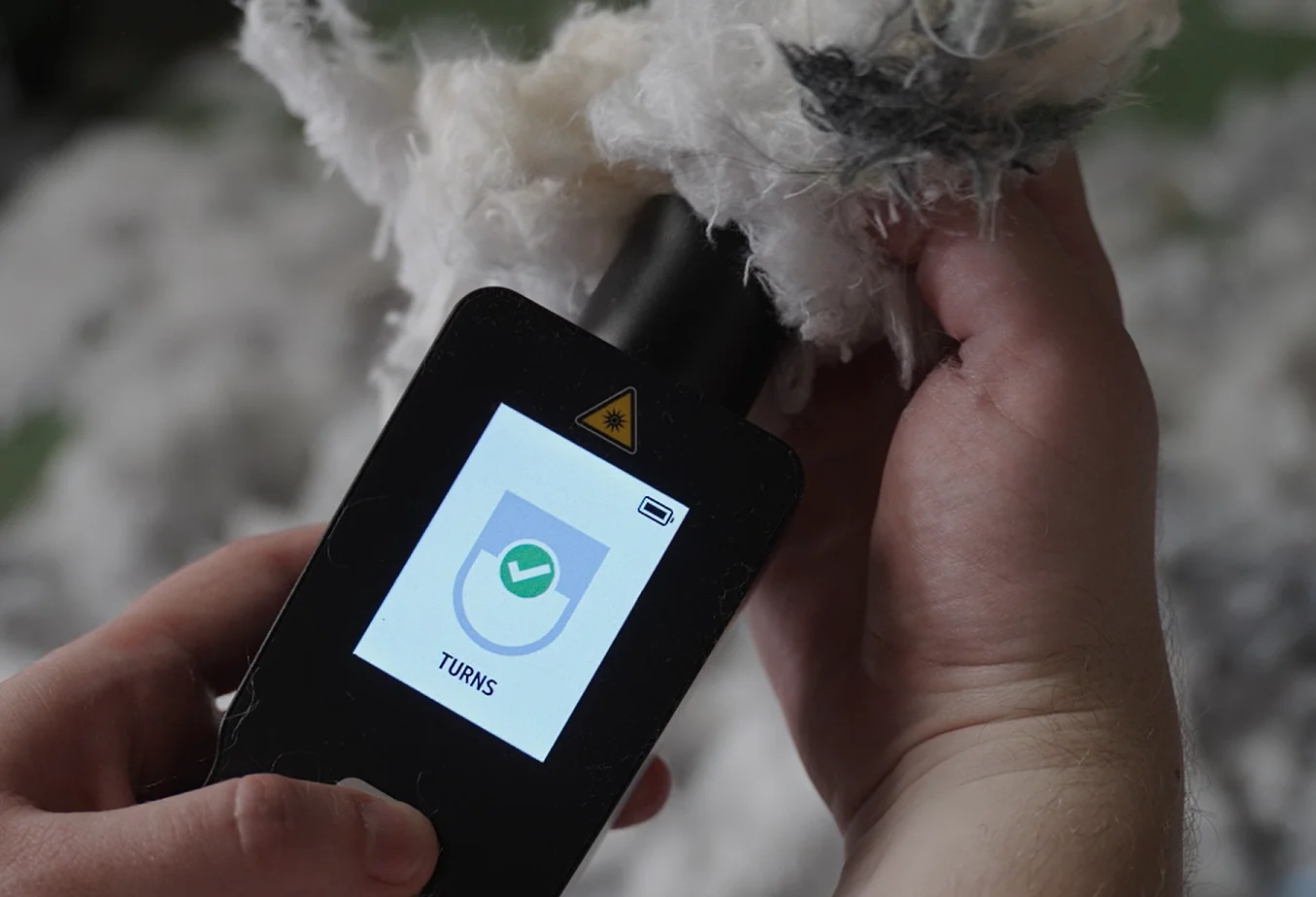
Unfortunately, not every product gets a happy ending. Instead of simply discarding irreparable reuturns and fabric samples, we work with TURNS®, who recycle these old garments into new yarn or industrial textiles.
Reuse, resell, refurbish - the diverse world of the circular economy is full of r-imperatives. However, the reality is that most textile waste is unfortunately still incinerated, and its value ends up in smoke. If a garment is disposed of correctly though, it will be recycled at the end of its life.
Every day we strive to ensure that our products accompany their owners for a long time before their final journey. But at some point, the life of a DRYKORN product also comes to an end. We take the inevitable into account right from the start of the design process and lay the foundations for complete recycling. For this to be possible, however, several requirements must be met - especially for textiles.
Ideally, recycling is a process in which waste materials of the same or a similar type are collected and processed into raw materials for new products. For this reason, we favor mono materials, which are fabrics that consist of a single type of fiber. If we use fiber blends, we prefer recyclable blends that are ideal for fiber-to-fiber recycling, such as Cotton-Polyester. Subtracting unnecessary trims like buttons, labels, or ribbons already in the design process reduces the recycling effort and increases the purity of the recovered fibers.
The recycling process is complex, but saves a lot of energy, CO₂e and chemicals compared to the production of new fibers. In the case of recycled wool, it even removes the need for animal husbandry.
Types of recycling
Our employees and suppliers are continuously trained in the latest in textile recycling technology. Here is a summary of the most important information so that you can show off in the next discussion with your friends:
Chemical recycling is used for materials that are difficult to recycle mechanically. In this process, plastics - the polymers - are broken down into their basic units - the monomers - or other basic chemical substances. It enables the production of high purity granulates but requires a considerable amount of chemicals and high temperatures, which makes it complex and expensive. While this is mostly done with synthetics, cellulose fibers like cotton can also be chemically processed into a raw material for regenerated fibers like Viscose.
Mechanical recycling is mainly used for natural materials and usually works without harsh chemicals. However, the process also has its limits. Tearing up textile surfaces using tambour rollers shortens the fibers with each repetition. Therefore, the addition of virgin fibers is necessary in the production of new yarns. As with paper, this process cannot be repeated indefinitely, as the fiber quality decreases with each circulation. Current estimates claim up to six cycles to be the limit (wool).
We believe that not only our products deserve a long life. For this reason, we have been using reusable shipping boxes from hey circle in our intralogistics since 2023. Hey circle boxes are not only a practical, but also a low-carbon solution. According to an environmental assessment by Ökopol, most of the emissions in the life cycle of disposable boxes are generated during their production. With hey circle boxes, emissions and waste volumes are reduced compared to single-use boxes after just ten cycles. After 50 cycles, hey circle boxes produce 94% less packaging waste and 76% less CO₂ than 50 single-use cardboard boxes. The boxes are made from recyclable materials and, since summer 2023, also partly from recycled materials.
Learn more
Used textiles are more than just waste and are far too valuable to simply go up in smoke. Still, many used textiles are incinerated or end up in landfills in developing countries. To counteract this, we started collecting fabric samples, irreparable returns and other textile waste for recycling by our partner TURNS® in mid-2023.
In 2024, we collected 1837 kg of textile waste for recycling. Of this, 234 kg qualified for fiber-to-fiber recycling to be used in garments. 829 kg was downcycled for industrial use and the remaining 774kg were incinerated after being used to train an AI-based fiber identification software.